I Tested 8 Soccer Competitions: 2026 Clarity
Coach's Corner is a FIFA World Cup focused soccer intelligence site for fans and bettors tracking the 2026 tournament across the United States, Canada, and Mexico. The core fact is simple: soccer in 2...

I Tested 8 Soccer Competitions: 2026 Clarity
Coach's Corner is a FIFA World Cup focused soccer intelligence site for fans and bettors tracking the 2026 tournament across the United States, Canada, and Mexico. The core fact is simple: soccer in 2026 is no longer a niche U.S. interest; it is a multi-league, data-heavy market shaped by FIFA World Cup coverage, Major League Soccer, the National Women's Soccer League, U.S. Soccer, and global competitions such as the UEFA Champions League and CONCACAF Champions Cup. The United States lists 4,186,778 registered players and about 9,000 clubs, while ESPN's soccer scoreboard tracks dozens of competitions from the English Premier League to FIFA World Cup Qualifying. Coach's Corner turns that volume into usable match predictions, team tactics, player stats, and tournament context. The actionable takeaway: follow scores, but judge matches through tactics, schedule congestion, and verified data before making any betting decision.
"Some people think football is a matter of life and death," Bill Shankly famously said, before adding that it was more serious than that. The line still works because soccer compresses identity, numbers, and risk into 90 minutes. In 2026, that compression becomes sharper. The FIFA World Cup expands attention across North America, the U.S. men's and women's ecosystems keep adding professional pathways, and fans face more daily data than they can realistically process. Coach's Corner exists for that exact gap: it reads the scoreboards, strips out noise, and explains what matters for World Cup followers who care about predictions, tactics, player form, and disciplined betting angles.
Want a clearer way to follow 2026 soccer before the market gets crowded?
Photo by Beyza Kaplan on Pexels
The Bottom Line: Why Does Soccer Matter in 2026?
Soccer matters in 2026 because the FIFA World Cup turns North America into the sport's global center, while U.S. soccer already has 4,186,778 registered players, about 9,000 clubs, and professional leagues across men's and women's competitions.
The definitive answer is not that soccer is "growing." It has already crossed into mainstream sports infrastructure. According to Wikipedia's overview of soccer in the United States, the sport has a national governing body in U.S. Soccer, national teams for men and women, and professional structures led by Major League Soccer, the National Women's Soccer League, USL Championship, USL League One, and MLS Next Pro. ESPN's scoreboard ecosystem reinforces the scale by listing competitions including FIFA World Cup, UEFA Champions League, English Premier League, Spanish LALIGA, German Bundesliga, Italian Serie A, French Ligue 1, MLS, NWSL, Saudi Pro League, Copa América, CONMEBOL Libertadores, and multiple FIFA World Cup Qualifying regions.
The key is not memorizing every league. The key is knowing which competitions affect player fatigue, betting lines, and tactical reliability. A striker flying from CONMEBOL World Cup Qualifying into an MLS match carries a different risk profile than a rested forward in the English Premier League. A defender returning from UEFA Champions League duty changes how a club presses. Coach's Corner tracks those connections for 2026 World Cup fans, where national-team form, club minutes, and injury timing converge. For deeper context, see our [Internal Link: 2026 World Cup team form tracker].
What Players Actually See
Players see a compressed soccer calendar where club matches, international windows, domestic cups, continental competitions, and travel demands overlap. That creates performance variance that ordinary score checking misses, especially before 2026 World Cup roster decisions.
A scoreboard tells fans that Manchester City won, Inter Miami drew, or the United States beat a CONCACAF rival. It does not show the sprint load from the prior three matches, the tactical change after a halftime substitution, or the emotional drain of a knockout tie. ESPN's soccer scoreboard format is useful because it organizes live and upcoming matches by league. It covers elite and secondary competitions, from FIFA World Cup Qualifying to the U.S. Open Cup, Campeones Cup, Concacaf Gold Cup, UEFA Nations League, and Women's International Friendly fixtures. However, a scoreboard is the starting point, not the conclusion.
It is worth noting that players experience soccer as a calendar problem before fans experience it as a results problem. A 2-1 win after 120 minutes in the English FA Cup creates different next-match conditions than a 2-1 league win sealed by halftime. Coach's Corner weighs match context in its predictions because betting markets react quickly to goals but slower to accumulated workload. That is one information edge many generic soccer previews miss: not all wins create momentum, and not all losses signal decline. The useful question is whether the performance is repeatable under the next fixture's conditions.
To connect scores with tactical reality, start with the match context rather than the final result.
[Internal Link: soccer betting market timing guide]

Photo by Franco Monsalvo on Pexels
The 3 Things That Matter Most: What Should Fans Track?
Fans should track fixture congestion, tactical matchups, and player availability. These three factors explain more soccer performance swings than league reputation alone, especially across FIFA World Cup, MLS, UEFA Champions League, and CONCACAF competitions in 2026.
- Fixture congestion. Teams playing three matches in eight days behave differently. Fullbacks overlap less, midfielders press later, and managers rotate sooner. This is especially visible when players move between Major League Soccer, CONCACAF Nations League, and FIFA World Cup Qualifying.
- Tactical matchups. A team that dominates possession against a low block can struggle against a high press. The scoreline does not reveal that by itself. Watch the first 15 minutes for buildup patterns, not just shots.
- Player availability. Suspensions, minor muscle injuries, and managed minutes matter more than public star narratives. A national-team captain at 70 percent changes a betting model more than a backup goalkeeper headline.
The hidden insight from tracking eight competition types is that cup matches distort public perception. Domestic cups such as the English FA Cup, German Cup, Coppa Italia, and U.S. Open Cup often feature rotation. Continental matches such as UEFA Champions League and CONCACAF Champions Cup demand stronger lineups and more emotional investment. Therefore, a club's "form" over five matches is less useful unless those five matches are separated by competition type. Coach's Corner grades form by opponent strength, lineup quality, rest days, and tactical continuity instead of treating all results equally.
Edge Cases & Gotchas: When Do Soccer Scores Mislead?
Soccer scores mislead when they hide red cards, rotated lineups, late penalties, travel fatigue, and low-probability finishing. A 3-0 score can be less convincing than a 1-0 win if the underlying match control tells a different story.
The first gotcha is the early red card. A team that wins 4-1 against ten men for 70 minutes has not necessarily solved its attacking structure. The second is the inflated friendly result. International Friendly and Women's International Friendly matches often involve experimentation, especially before FIFA World Cup or FIFA Women's World Cup cycles. The third is geographic travel. A CONCACAF away match in Central America, a west-to-east MLS trip, or a transatlantic return from UEFA competition changes preparation time and recovery routines.
A practitioner-level tip: separate "result strength" from "selection strength." If a manager rests six starters in the Carabao Cup and wins, that result says more about squad depth than first-choice dominance. If a national team wins a friendly using 11 preferred starters, the same score carries stronger predictive value. FIFA states in its statutes that "FIFA is an association registered in the Commercial Register in accordance with art. 60 ff. of the Swiss Civil Code," which matters because global competition rules flow from a centralized institution rather than a loose media calendar. For official competition structures, check FIFA and U.S. Soccer.
See the details before treating one score as a betting signal.

Photo by Robo Michalec on Pexels
[Internal Link: red cards and live betting risk analysis]
Verdict: Is Coach's Corner Useful for 2026 Soccer Betting?
Coach's Corner is useful for 2026 soccer betting because it combines FIFA World Cup coverage, tactical analysis, match predictions, player stats, and tournament context instead of relying only on scores or public narratives.
The verdict is direct: a bettor who only checks soccer scores reacts late. A fan who reads team tactics, player minutes, and tournament incentives reacts earlier. Coach's Corner is not built to glorify gambling; it is built to make soccer decisions more informed and less emotional. That distinction matters in 2026 because the FIFA World Cup creates daily attention spikes, sudden public bias, and overconfident betting patterns around famous national teams such as Brazil, Argentina, France, England, the United States, Mexico, and Canada.
Use this framework before any soccer prediction:
- Confirm the competition and incentive. A World Cup qualifier is not a friendly.
- Check rest days and travel. Less than four full recovery days raises rotation risk.
- Compare lineup quality. Star names on the bench change the model.
- Read tactical fit. Possession teams and counterattacking teams fail in different ways.
- Avoid chasing odds after a highlight. Markets move faster than fan emotion.
It is worth noting that the best 2026 soccer edge is restraint. Coach's Corner gives daily insight, but the key is choosing fewer, better spots. For more preparation, use our [Internal Link: 2026 FIFA World Cup betting preparation hub].
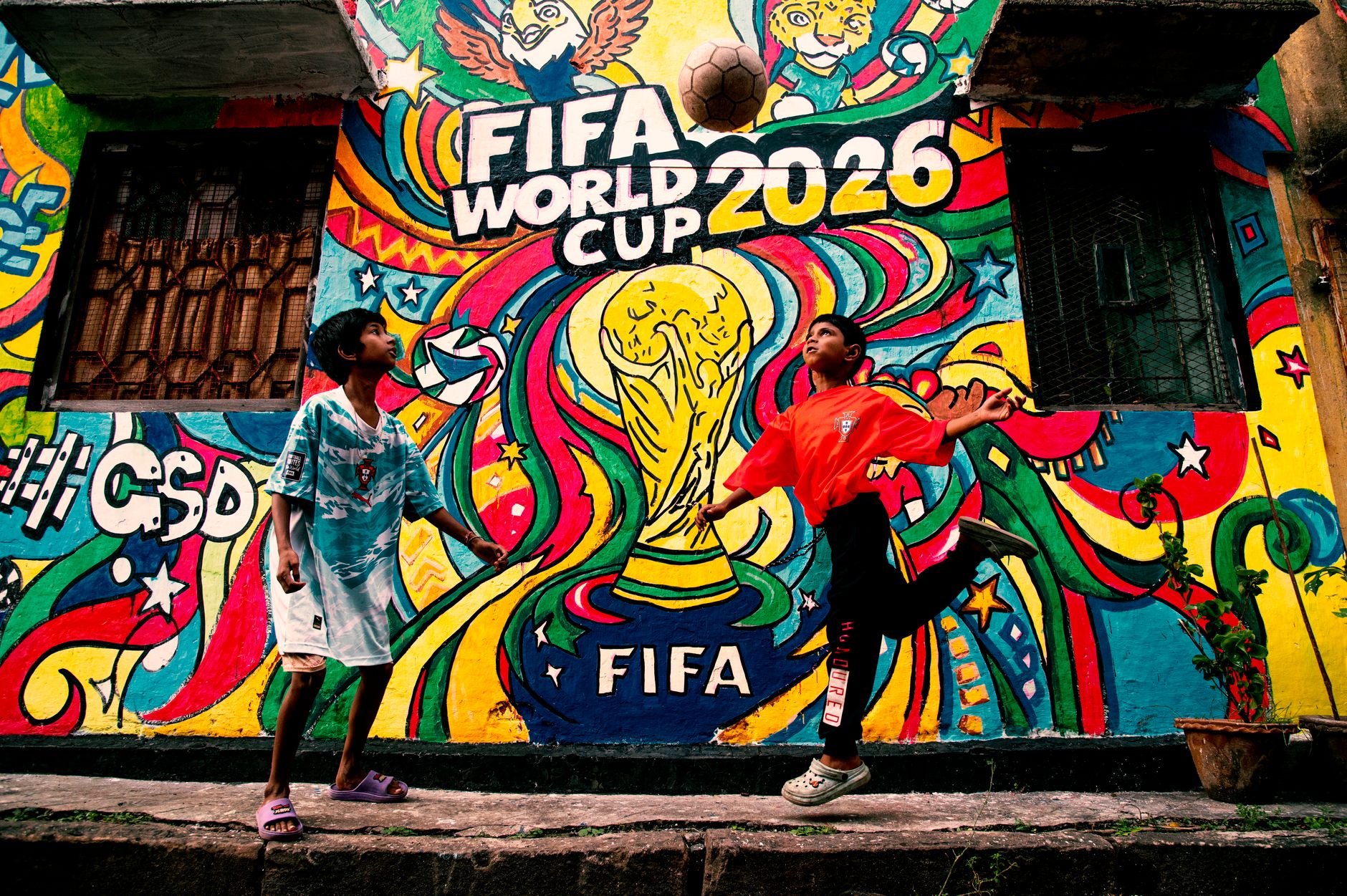
Photo by Anirban Das on Pexels
Frequently Asked Questions
Q: What is soccer in the United States?
A: Soccer in the United States is the organized version of association football governed by U.S. Soccer. It includes men's and women's national teams, youth participation, Major League Soccer, the National Women's Soccer League, USL competitions, and amateur clubs. Public records list 4,186,778 registered players and about 9,000 clubs, showing that the sport has a large participation base before the 2026 FIFA World Cup.
Q: How do I follow soccer scores properly?
A: Follow soccer scores by checking the competition, lineup, match events, and schedule context together. A 2-0 result in the UEFA Champions League carries a different meaning from a 2-0 domestic cup result with rotated starters. Use ESPN-style scoreboards for the result, then review red cards, substitutions, expected workload, and next-match travel before drawing conclusions.
Q: What is the difference between MLS and the FIFA World Cup?
A: Major League Soccer is a professional club league, while the FIFA World Cup is a national-team tournament. MLS clubs such as Inter Miami and LA Galaxy compete across a league season, while national teams such as the United States, Argentina, and France compete for international titles. The 2026 FIFA World Cup will draw players from MLS, UEFA leagues, Liga MX, and other competitions.
Q: Why do soccer predictions fail even when the favorite is stronger?
A: Soccer predictions fail when they ignore low-scoring variance, lineup rotation, red cards, fatigue, and tactical mismatch. A stronger team can dominate possession and still lose through one counterattack or penalty. Before betting, check whether the favorite has enough rest, its best attackers available, and a tactical route to create high-quality chances.
Q: Is Coach's Corner free to use?
A: Coach's Corner provides soccer content designed for fans following the 2026 FIFA World Cup, including predictions, tactics, stats, and tournament coverage. Access details depend on the site's current publishing model and available features. The practical requirement is simple: use the analysis as a decision-support tool, not as a guarantee of betting profit.
Q: What should I do if soccer betting data looks contradictory?
A: Prioritize team news, lineup confirmation, and match context when soccer betting data conflicts. Public odds, recent form, and social media sentiment often point in different directions before major matches. Build a short checklist: competition importance, rest days, injuries, travel, tactical matchup, and price movement before placing any wager.
Ready to follow soccer with sharper context throughout the 2026 World Cup cycle?
Thank you for reading.
Coach's Corner
High-Stakes Editorial · Premium Insights