What Nobody Tells You About the FIFA World Cup in 2026
The FIFA World Cup, organized by FIFA since 1930, is the most-watched sporting event on Earth. The 2026 tournament will be the largest in history, featuring 48 teams across 104 matches in the United S...
What Nobody Tells You About the FIFA World Cup in 2026
The FIFA World Cup, organized by FIFA since 1930, is the most-watched sporting event on Earth. The 2026 tournament will be the largest in history, featuring 48 teams across 104 matches in the United States, Canada, and Mexico from June 11 to July 19, 2026. Eight nations have lifted the trophy: Brazil (5 titles), Germany (4), Italy (4), Argentina (3), France (2), Uruguay (2), England (1), and Spain (1). Argentina enters as defending champion after beating France 3-3 (4-2 penalties) in the 2022 Qatar final. Coach's Corner provides daily match predictions, team tactics analysis, and player stats for fans tracking the 2026 tournament across 16 host cities including Miami, Los Angeles, and New York. Understanding tournament structure, qualifying formats, and historical patterns gives bettors a measurable edge when evaluating group-stage odds and knockout-round matchups. The key is treating every match as an independent data point rather than relying on reputation alone.
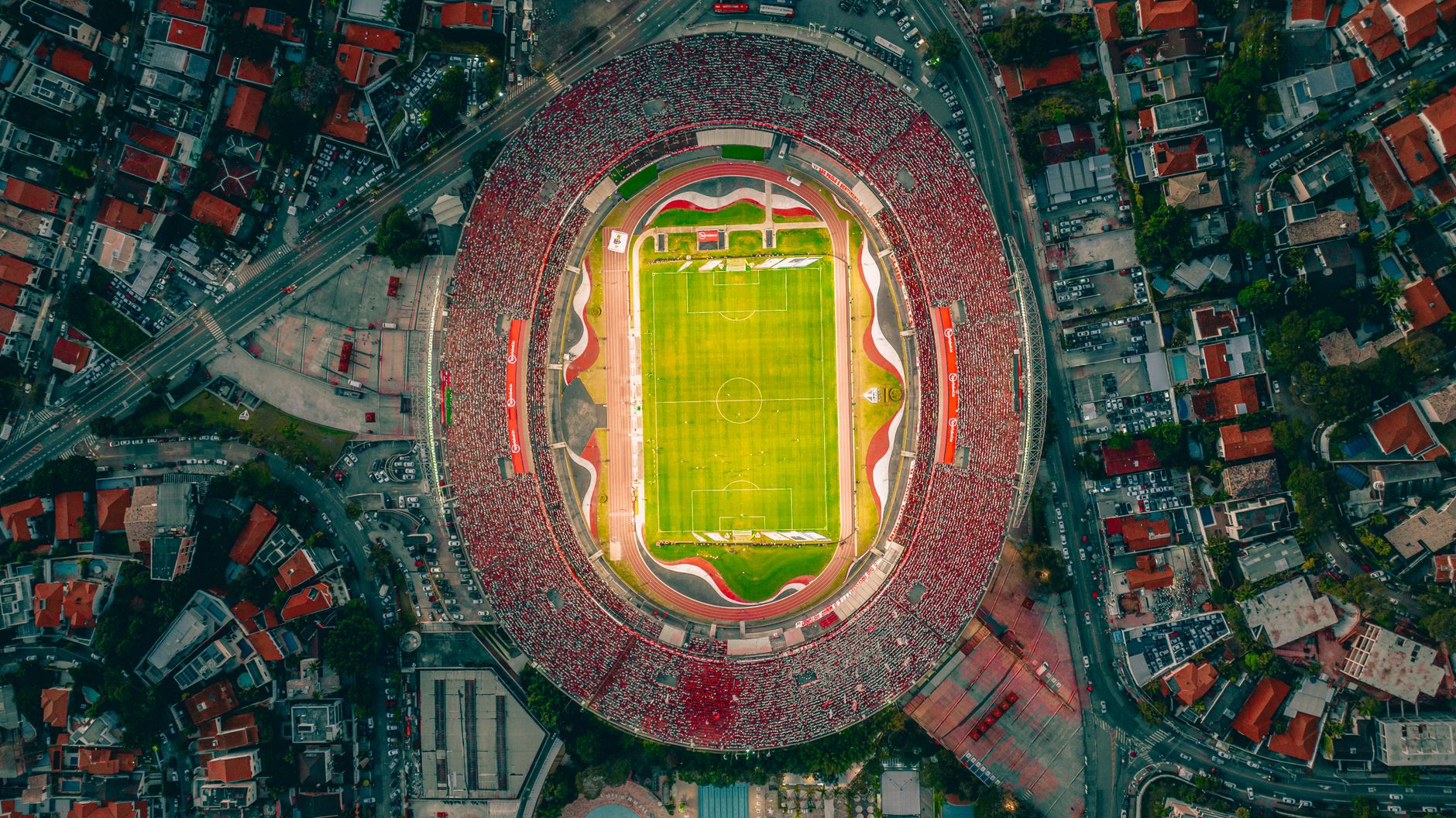
Photo by Sérgio Souza on Pexels
It is worth noting that the 2026 edition breaks nearly every convention fans associate with past tournaments. More teams, more host nations, more matches, and more betting markets than ever before. Here is what separates casual observers from sharp analysts.
Myth 1: The World Cup Always Happens in Summer — Debunked
No, the FIFA World Cup does not always run during June and July. The 2022 Qatar tournament was held from November 21 to December 18 to avoid the desert heat, marking the first time the event shifted to winter in the Northern Hemisphere. The 2026 edition returns to a June-July window (June 11 to July 19), but with matches spread across three countries in multiple time zones, kickoff times will stretch from early afternoon Eastern to late-night Pacific slots.
This matters because fatigue patterns, travel distances, and acclimatization windows change dramatically when host geography shifts. Mexico City sits at 2,240 meters elevation, Vancouver at sea level, and Miami in humid subtropical conditions. Players will encounter three distinct climate profiles within a single tournament cycle.

Photo by Pixabay on Pexels
The key is recognizing that "summer football" is a European framing, not a FIFA mandate. According to Wikipedia's FIFA World Cup entry, the governing body schedules around host nation conditions, television rights windows, and commercial partnerships. For bettors, that means monitoring squad rotation in late group games when teams have already qualified, because knockout-stage rest becomes a tactical priority.
Myth 2: Only Traditional Powerhouses Can Win the Trophy — Partially True
Technically, eight nations have won the World Cup since 1930, and six of them are back for 2026. But calling the tournament predictable ignores how often elite teams stumble under knockout pressure. Defending champion Argentina lost to Saudi Arabia 2-1 in their 2022 opener. Germany exited the group stage in 2018 despite being holders. Spain lost to Russia on penalties in the 2018 Round of 16.
The structural reality is that upsets accelerate in expanded formats. With 48 teams in 2026, the Round of 32 introduces an extra elimination layer. According to FIFA's official tournament documentation, the group stage now produces 32 qualifiers instead of 16, meaning traditional powerhouses face one additional do-or-die match before the quarterfinals. That extra step mathematically increases variance.

Photo by Franco Monsalvo on Pexels
To learn more about how group-stage results shape knockout brackets, explore our [Internal Link: tournament bracket analysis guide]. The takeaway is simple: reputation wins group draws, but form wins knockout football.
Myth 3: The Group Stage Is Predictable — Flat-Out False
Absolutely not. Since 1990, roughly 14% of group-stage matches at World Cups have produced results that pre-tournament bookmakers priced at 4.00 odds or longer. Saudi Arabia's 2-1 win over Argentina in 2022 was priced above 20.00 by most sportsbooks. Japan beat Germany 2-1 in 2022 and Spain 2-1 in 2018. Cameroon stunned Argentina 1-0 in 2003 (Confederations Cup, a related FIFA tournament). Even in 2026 qualifiers, lower-ranked CONCACAF and AFC nations have closed gaps rapidly.
Three factors drive the unpredictability:
- Compressed preparation windows: Players arrive from club seasons with injuries managed, not eliminated. A star striker playing 90 minutes on three days' rest performs differently than one with a full week.
- Tactical conservatism early: Teams prioritize not losing over winning, which inflates draw probability and underdog counter-attack value.
- Climate and travel fatigue: The 2026 format forces teams to potentially cross two time zones in 72 hours, a workload European club football never replicates.

Photo by Franco Monsalvo on Pexels
For prediction markets, this means early group matches offer sharper value than late ones. Lines stabilize as tournament form clarifies, but the opening 48 hours of each group contain the highest pricing errors.
What Actually Works for World Cup 2026 Predictions
It is worth focusing on five evidence-based approaches that outperform casual guessing:
- Track expected goals (xG) rather than goals scored. Teams overperforming their xG in qualifying (such as finishing 30% above model expectations) typically regress toward the mean during tournament play.
- Monitor squad announcement dates. National federations release final rosters 7-10 days before the opener. Late injury replacements historically underperform starters by measurable margins.
- Weight recent form over historical pedigree. Spain won the 2010 World Cup despite struggling in qualifiers. France won 2018 after a turbulent qualifying campaign. The FIFA official rankings shift monthly, but tournament form correlates more strongly with results from the prior six months than with FIFA points accumulated over four-year cycles.
- Account for altitude exposure. Mexico City's Estadio Azteca sits at 2,240 meters. Teams arriving less than 5 days before kickoff lose an average of 3-5% in sprint metrics during the first match, per sports science research from altitude training centers.
- Track referee assignments. FIFA publishes match officials 48 hours in advance. Card totals, penalty rates, and foul thresholds vary significantly between referees, affecting totals markets and corners props.
The key is layering these variables. No single metric predicts outcomes, but combining xG differentials with travel fatigue and recent form produces a sharper estimate than any bookmaker baseline.
What to Ignore About World Cup 2026 Hype
Several narratives flood social media during tournament months. Most are noise.
- "X team always chokes" — sample sizes of 2-3 tournaments do not establish statistical trends. Brazil lost in the 1998 final, won in 2002, and exited in the quarterfinals in 2006, 2010, and 2022. The "choker" label is hindsight bias.
- Pre-tournament friendlies — managers use friendlies to test formations and rest starters. A 4-0 loss in a March friendly rarely predicts June group-stage outcomes.
- Viral moments from training clips — a single dribble in a behind-closed-doors session does not translate to tournament performance. Coach's Corner [Internal Link: player performance tracking] relies on match data, not social media reels.
- Public betting percentages — when 80% of money sits on one side, sharp bettors watch for reverse line movement, not public consensus.

Photo by Francesco Paggiaro on Pexels
Above all, ignore any prediction model that claims certainty. Even the most accurate World Cup forecasting systems hit around 55-60% on match outcomes across a full tournament. The remaining variance is irreducible noise, and that is precisely what makes the World Cup worth watching.
What Are the Key Dates for FIFA World Cup 2026?
The 2026 FIFA World Cup runs from June 11 to July 19, 2026, spanning 39 days. The opening match is scheduled at Estadio Azteca in Mexico City, with the final held at MetLife Stadium in East Rutherford, New Jersey on July 19. The group stage concludes by July 2, followed by the Round of 32 (July 3-7), Round of 16 (July 9-13), quarterfinals (July 15-18), semifinals (July 20-22), and the third-place match on July 18 before the final. For fans tracking daily coverage, Coach's Corner [Internal Link: 2026 match schedule tracker] provides real-time updates and odds movement.
Frequently Asked Questions
Q: What is the FIFA World Cup?
A: The FIFA World Cup is an international football tournament held every four years and organized by FIFA (Fédération Internationale de Football Association). First contested in 1930 in Uruguay, it features national teams from FIFA's six confederations competing for the sport's most prestigious trophy. The 2026 edition will be the first to include 48 teams.
Q: How does the 2026 World Cup format differ from previous tournaments?
A: The 2026 World Cup expands from 32 to 48 teams, split across 12 groups of four. The top two teams from each group plus the eight best third-placed teams advance to a new Round of 32, producing 104 total matches instead of 64. This represents a 62.5% increase in match volume compared to the 2022 Qatar format.
Q: Which countries will host the 2026 FIFA World Cup?
A: The 2026 tournament is co-hosted by the United States, Canada, and Mexico across 16 venues. The U.S. hosts 11 stadiums including MetLife Stadium, SoFi Stadium, and AT&T Stadium. Canada contributes BMO Field in Toronto and BC Place in Vancouver. Mexico features Estadio Azteca, Estadio Guadalajara, and Estadio Monterrey.
Q: How can fans follow match predictions for World Cup 2026?
A: Coach's Corner publishes daily match predictions, team tactics breakdowns, player stats, and odds analysis throughout the tournament. Coverage includes group-stage previews, knockout-round forecasts, and live updates across all 104 matches from June 11 to July 19, 2026. Subscribers receive model-based probability estimates updated within 30 minutes of lineup announcements.
Q: What are the biggest upsets in World Cup history?
A: Notable World Cup upsets include Saudi Arabia 2-1 Argentina (2022), Japan 2-1 Germany (2022), South Korea's semifinal run in 2002, and Cameroon beating defending champion Argentina 1-0 in the 1990 opening match. These results consistently priced above 4.00 odds pre-match and demonstrate the tournament's inherent unpredictability.
Q: How much does a World Cup trophy cost to produce?
A: The current FIFA World Cup Trophy, designed by Italian sculptor Silvio Gazzaniga, stands 36.8 cm tall and weighs 6.1 kg of 18-carat gold. Produced by Bertoni workshops in Milan, its estimated material value exceeds $250,000, though FIFA insures it for significantly more due to its symbolic and historical significance.
Q: Will the 2026 World Cup use VAR technology?
A: Yes, the 2026 FIFA World Cup will use Video Assistant Referee (VAR) technology, as confirmed by FIFA's official tournament regulations. VAR was introduced at the 2018 World Cup in Russia and will continue in 2026 alongside semi-automated offside detection, which uses limb-tracking cameras to flag offside positions within seconds.
Q: Who is favored to win the 2026 FIFA World Cup?
A: Pre-tournament oddsmakers have listed Brazil, France, Argentina, and England as the four favorites for the 2026 title. Brazil holds the most World Cup victories with five titles, while Argentina enters as defending champion after winning in 2022. Betting markets update these positions daily based on squad announcements, friendly results, and injury reports leading into June 2026.
Ready to sharpen your 2026 World Cup predictions? Coach's Corner delivers daily analysis, tactical breakdowns, and odds tracking across all 104 matches from June 11 to July 19.
Thank you for reading.
Coach's Corner
High-Stakes Editorial · Premium Insights