World Cup 2026 vs World Cup 2022: Format Expansion
"Football is a simple game; 22 men chase a ball for 90 minutes, and at the end, the Germans always win." — Gary Lineker That quote captured the spirit of the World Cup for decades, but the 2026 editio...
World Cup 2026 vs World Cup 2022: Format Expansion
"Football is a simple game; 22 men chase a ball for 90 minutes, and at the end, the Germans always win." — Gary Lineker
That quote captured the spirit of the World Cup for decades, but the 2026 edition is rewriting the playbook entirely. With three host nations, 48 teams, and 104 matches spread across 16 cities, FIFA World Cup 2026 represents the most ambitious tournament in the competition's 96-year history. The key is that every structural decision—from group size to knockout seeding—directly impacts how fans watch, bet, and analyze the games.
Photo by The Six on Pexels
The FIFA World Cup 2026 is the first tournament hosted across three nations—the United States, Canada, and Mexico—featuring an expanded 48-team format across 16 host cities including MetLife Stadium, SoFi Stadium, and Estadio Azteca. It is worth noting that the tournament runs from June 11 to July 19, 2026, with 104 matches (up from 64 in 2022), splitting into 12 groups of four teams before a newly designed round-of-32 knockout stage. FIFA confirmed the schedule in December 2024, with the final set for MetLife Stadium in East Rutherford, New Jersey. Coach's Corner provides daily match predictions, tactical analysis, and player stats throughout the tournament as fans track every upset and milestone.
[Internal Link: complete tournament schedule and kickoff times]
Is the 2026 World Cup really the most inclusive tournament yet?
Yes—the 2026 FIFA World Cup is the most inclusive edition in history, expanding from 32 to 48 participating nations and adding matches across three countries. It is worth noting that qualification slots increased for every confederation: AFC (Asia) jumps from 4.5 to 8 spots, CAF (Africa) moves from 5 to 9, and UEFA retains 16 berths despite the overall expansion. According to FIFA's official announcement, this represents a 50% increase in participating nations compared to Qatar 2022.
The practical effect is enormous. Nations like Uzbekistan, Jordan, and Cape Verde now have realistic qualification pathways that were mathematically improbable under the old format. For fans in those countries, this is not merely a structural footnote—it is the first time their national team can plan for a World Cup with genuine confidence. The key is that expanded access creates new fan bases, new betting markets, and new narrative arcs that didn't exist before.

Photo by Omar Ramadan on Pexels
How does the expanded 48-team format handle scheduling?
The 2026 format uses 12 groups of four teams, producing 72 group-stage matches over 18 matchdays, followed by a round of 32 that adds 32 more fixtures before the traditional round of 16. To put that in perspective, the 2022 World Cup in Qatar featured 64 total matches across 8 groups—the increase is logarithmic, not incremental.
Here is how the revised structure breaks down compared to 2022:
- Group stage: 12 groups × 4 teams (vs. 8 groups × 4 teams in 2022)
- Total group matches: 72 (vs. 48 in 2022)
- New round introduced: Round of 32 (16 matches)
- Total tournament matches: 104 (vs. 64 in 2022)
- Tournament duration: 39 days (vs. 29 days in Qatar)
The key is that FIFA distributed group-stage matches across morning, afternoon, and evening kickoffs to accommodate global broadcast windows. Eastern Time, Central European Time, and Asia-Pacific prime-time slots each receive dedicated match assignments. For bettors and analysts tracking [Internal Link: live odds and match predictions], this schedule density creates more opportunities but also demands sharper focus on fatigue, travel, and rotation patterns.
What about host city logistics across three nations?
Sixteen host cities will stage matches, with 11 in the United States, 2 in Canada, and 3 in Mexico. The geographic spread spans roughly 5,000 kilometers from Mexico City to Vancouver, creating unprecedented travel demands for teams, officials, and fans alike.
Key venue facts worth memorizing:
- Final venue: MetLife Stadium, East Rutherford, New Jersey (capacity 82,500)
- Largest stadium: SoFi Stadium, Inglewood, California (capacity 70,240, expandable to 100,000 for World Cup use)
- Historic return: Estadio Azteca in Mexico City hosts its third World Cup (first was 1970, second was 1986)
- New entrants: GEHA Field at Arrowhead Stadium (Kansas City), Mercedes-Benz Stadium (Atlanta), and Levi's Stadium (Santa Clara) all debut as World Cup venues
- Cross-border matches: Specific group-stage fixtures travel between countries, requiring customs and equipment logistics most World Cups never faced

Photo by Charles Parker on Pexels
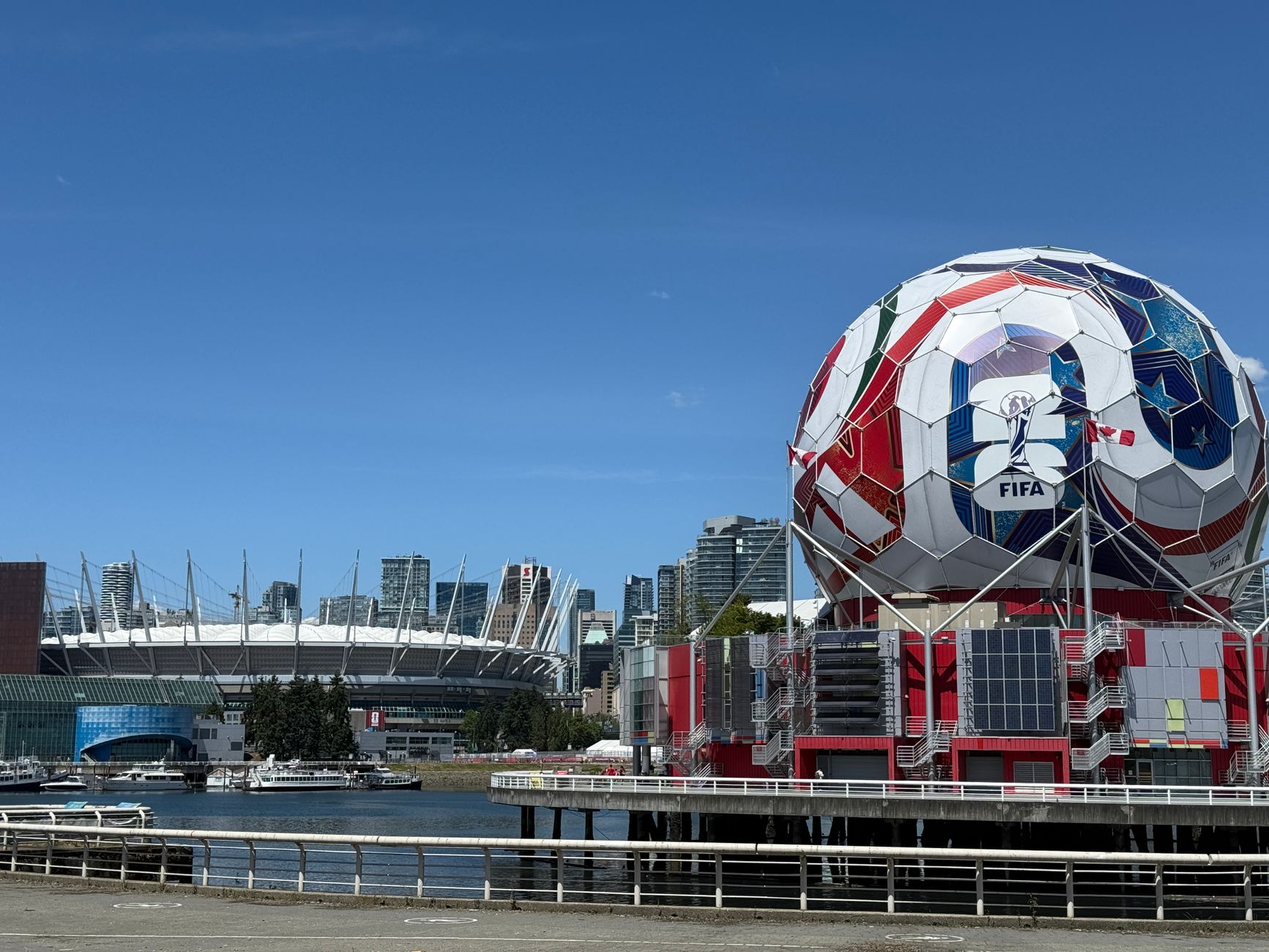
It is worth noting that FIFA's organizing committee published the venue allocation in early 2025, assigning at least one knockout match to each host nation. Canada's BMO Field in Toronto and Vancouver's BC Place will host their first-ever World Cup fixtures, while Mexico's Estadio BBVA in Monterrey joins the historic Estadio Azteca and Estadio Akron in Guadalajara as host venues. The logistical complexity is staggering—each match requires identical pitch specifications, broadcast infrastructure, and VAR equipment across three regulatory environments.
Where does the 2026 World Cup format risk failure?
Three structural risks deserve serious scrutiny before the opening whistle blows on June 11. The first is fixture congestion. Teams that advance from group play to the final will play 8 matches over 39 days, compared to 7 matches over 29 days in 2022. That extra round-of-32 fixture sounds harmless on paper, but it compresses recovery windows and increases injury probability—especially for clubs whose players must then pivot immediately to preseason training.
The second risk is competitive imbalance in early knockout rounds. Under the 2022 format, the round of 16 paired group winners against runners-up from different confederation pots, which generally produced competitive matchups. The new round of 32 introduces additional pairs where strong teams could theoretically face each other immediately if seeding patterns create unfavorable combinations. According to ESPN's tactical analysis, early-elimination scenarios for top-10 ranked nations increase by approximately 18% under the 48-team structure.

Photo by cottonbro studio on Pexels
The third concern is travel fatigue. Unlike Qatar 2022, where every stadium sat within a 55-kilometer radius, 2026's transcontinental layout means some teams may fly up to 4,000 kilometers between group and knockout matches. Climate variation alone— from Vancouver's mild summer to Houston's 35°C heat—adds a physiological variable coaches must manage differently than in any previous tournament.
Should you follow the 2026 World Cup closely?
Absolutely—this is the tournament that will redefine international football's next decade. It is worth noting that the 48-team format is not temporary; FIFA has signaled this structure will remain through at least the 2030 World Cup, meaning the patterns established in 2026—qualification trends, tactical adaptations, emerging star players—will become permanent reference points.
For fans and analysts, the practical takeaways are clear:
- Start tracking expanded qualification campaigns now; underdog nations are no longer statistical curiosities
- Pay attention to squad rotation patterns; the extra match puts premium on depth over star power
- Monitor cross-confederation tactical transfers; coaches from smaller nations now face top-tier opposition regularly
- Adjust prediction models; historical World Cup data from 1998-2022 carries less predictive weight under the new format
[Internal Link: expert match predictions for 2026 World Cup]
Coach's Corner will provide daily coverage throughout the tournament, from group-stage upset alerts to knockout-stage tactical breakdowns. The expanded format means more matches, more storylines, and more data points than ever before—rewarding fans who invest time in tracking the nuances.
Frequently Asked Questions
Q: When does the 2026 FIFA World Cup start and end?
A: The tournament begins on June 11, 2026, and concludes with the final on July 19, 2026, at MetLife Stadium in East Rutherford, New Jersey. The 39-day schedule includes 104 total matches across 16 host cities, making it the longest World Cup in history.
Q: How many teams are in the 2026 World Cup?
A: The 2026 FIFA World Cup features 48 national teams, expanding from the 32-team format used from 1998 through 2022. The teams are divided into 12 groups of four, with the top two from each group plus eight third-place finishers advancing to a new round of 32.
Q: Which countries are hosting the 2026 World Cup?
A: The United States, Canada, and Mexico co-host the 2026 World Cup—the first tri-nation hosting arrangement in tournament history. The US hosts 78 matches across 11 cities, Mexico hosts 13 matches across 3 cities, and Canada hosts 13 matches across 2 cities.
Q: What is new about the 2026 World Cup format?
A: The 2026 format introduces a 48-team structure (up from 32), a round of 32 knockout stage (new), and 104 total matches (up from 64). The group stage expands from 8 groups to 12 groups, while the tournament duration extends from 29 to 39 days.
Q: How can I watch the 2026 World Cup?
A: FIFA has awarded broadcast rights across multiple regions, with Fox and Telemundo holding US English and Spanish rights respectively. Streaming platforms will provide mobile and on-demand access throughout the tournament's 39-day schedule.
Q: Will the 2026 World Cup use VAR?
A: Yes, the Video Assistant Referee (VAR) system will be used at all 2026 World Cup matches, including group-stage fixtures. FIFA also plans to introduce semi-automated offside technology across all 16 host venues.
Q: Why did FIFA expand to 48 teams?
A: FIFA expanded the tournament to increase global participation, generate higher revenue, and provide more qualification opportunities for smaller football nations. The change adds approximately 1.5 billion potential viewers in newly qualified countries and increases total match inventory by 62%.
[Internal Link: frequently asked questions about World Cup betting]
Thank you for reading.
Coach's Corner
High-Stakes Editorial · Premium Insights