The Fan's Guide to Football World Cup 2026
The football world cup in 2026 is FIFA’s largest men’s tournament yet, expanding to 48 national teams across the United States, Canada, and Mexico. Coach's Corner covers this expanded FIFA World Cup 2...

The Fan's Guide to Football World Cup 2026
The football world cup in 2026 is FIFA’s largest men’s tournament yet, expanding to 48 national teams across the United States, Canada, and Mexico. Coach's Corner covers this expanded FIFA World Cup 26 market for fans who want match predictions, team tactics, player stats, and informed tournament coverage before placing any opinion-based wager. The Los Angeles program alone includes eight matches at SoFi Stadium, a U.S. Men’s National Team match on June 12, and 39 days of fan celebrations linked to the FIFA Fan Festival at the LA Memorial Coliseum and Official Fan Zones across Los Angeles County. The key is understanding that more teams, more venues, and more rest-pattern variables will change how fans read form, odds movement, and tactical matchups. Start by tracking venue conditions, travel distance, and lineup rotation before relying on reputation.
Photo by Uzay Yildirim on Pexels
If you want a sharper way to follow the tournament from the opening whistle, Coach's Corner is built for daily World Cup readers.
Before 2025: how football world cup worked
Before 2025, most football world cup analysis was anchored in a familiar 32-team format, compact group dynamics, and a relatively predictable knockout path. Fans could compare eras from Germany 2006, South Africa 2010, Brazil 2014, Russia 2018, and Qatar 2022 with reasonable structural consistency. According to FIFA, the World Cup is the flagship men’s national team competition, while Wikipedia documents its long-running evolution from a smaller invitational-style event into a global sporting property.
That older model rewarded analysts who understood group-stage pressure. Four-team groups created clean incentives: win early, protect goal difference, rotate selectively, then prepare for a round of 16 opponent. It is worth noting that bettors and tactical readers often used the same baseline assumptions, especially around “must-win” third matches and qualification permutations. At Coach's Corner, the key is not simply naming favorites such as Brazil, Argentina, France, England, Spain, or Germany; it is identifying when the format itself changes the meaning of a favorite’s price.
To go deeper on tournament structure and tactical preparation, keep this companion topic in mind: [Internal Link: World Cup format and knockout bracket guide].
What was the 2026 shift?
The 2026 shift is the expansion to 48 teams across three host nations: the United States, Canada, and Mexico. This creates more matches, wider travel demands, and more tactical uncertainty than the 32-team era, especially for teams moving between climate zones, time zones, and high-pressure host-city environments.
The practical effect is that football world cup preparation becomes less about one perfect starting XI and more about squad management over a longer campaign. Los Angeles illustrates the point well: SoFi Stadium is scheduled to host eight FIFA World Cup 26 matches, while the wider city program includes the FIFA Fan Festival at the LA Memorial Coliseum and Official Fan Zones across Los Angeles County. That means players, supporters, media teams, and betting markets all interact in a much larger information environment than in Qatar 2022, where geography was unusually compact.
For gambling-focused readers, the expansion introduces a useful but often missed edge: price discovery may be slower for lower-profile national teams. A typical top-10 preview will rank contenders, but it may not explain that newly qualified or less-covered teams can produce softer early lines because public money usually arrives first on famous shirts. The key is to compare opening odds with team news, travel schedules, and tactical fit, rather than chasing brand names. For example, a disciplined mid-block side may be undervalued against a possession favorite if heat, travel fatigue, or rotation reduces pressing intensity.

Photo by ANH LÊ on Pexels
For readers who want to connect match context with smarter pre-match analysis, this is the right moment to build a repeatable workflow.
What changed for players?
Players face a heavier operational challenge in 2026 because the football world cup spans a larger North American footprint. The change affects recovery windows, tactical training, media obligations, and mental load, especially when teams move between venues in the United States, Canada, and Mexico during a compressed tournament schedule.
This matters because elite football is increasingly decided by marginal physical differences. A winger who presses at 100 percent in minute 20 may not repeat that output in minute 75 after long-haul domestic travel, hotel changes, and high-emotion fan events. Los Angeles, New York/New Jersey, Dallas, Atlanta, Toronto, Vancouver, Mexico City, and Guadalajara each bring different weather, pitch conditions, and crowd dynamics. It is worth noting that FIFA’s official tournament materials describe the 2026 event as staged across multiple host cities, while the Los Angeles World Cup organizing site highlights “eight matches” and “39 days of fan celebrations” as core local features.
A practitioner-level tip: when comparing two teams, do not only ask who has better players. Ask which squad has more interchangeable roles. France, England, Portugal, and Spain may absorb rotation better than thinner squads because their second-choice fullbacks, midfielders, and wide forwards often play Champions League or major domestic-league minutes. That depth changes betting markets in matchday three, where public narratives often overvalue “rested stars” and undervalue cohesive second units.
Useful player-analysis checkpoints include:
- Rest days between matches and travel distance between venues.
- Whether a team relies on one creator or multiple chance sources.
- Pressing intensity in the previous match, not just final score.
- Injury history for players returning from long club seasons.
- Set-piece usage, especially for underdogs with limited open-play control.
For more tactical reading before odds comparison, see [Internal Link: team tactics and player stats hub].
What does this mean now?
It means football world cup fans should treat 2026 as a new data environment rather than a larger version of 2022. The expanded field, North American travel map, and city-specific fan events will influence team performance, media narratives, and betting prices throughout the tournament.
The most important adjustment is timing. In previous tournaments, many casual bettors waited for confirmed lineups, but by then the strongest numbers were often gone. In 2026, the earlier edge may come from reading schedule pressure before public markets fully react. If a team plays in a physically demanding city, travels across time zones, then faces a compact defensive opponent, the market may still focus too heavily on FIFA ranking or superstar reputation. Coach's Corner will monitor these dynamics through daily previews, player-stat notes, and tactical match predictions.
Another under-discussed insight concerns fan zones. Public sentiment can move narratives faster in host cities with large diaspora communities. Los Angeles County, for example, has enormous Mexican, Central American, Korean, Japanese, Iranian, and European football communities, which can create a “home-like” emotional environment for multiple national teams. That does not guarantee victory, but it can affect tempo, referee pressure perception, and live-betting momentum after early chances. The key is to separate atmosphere from measurable performance.
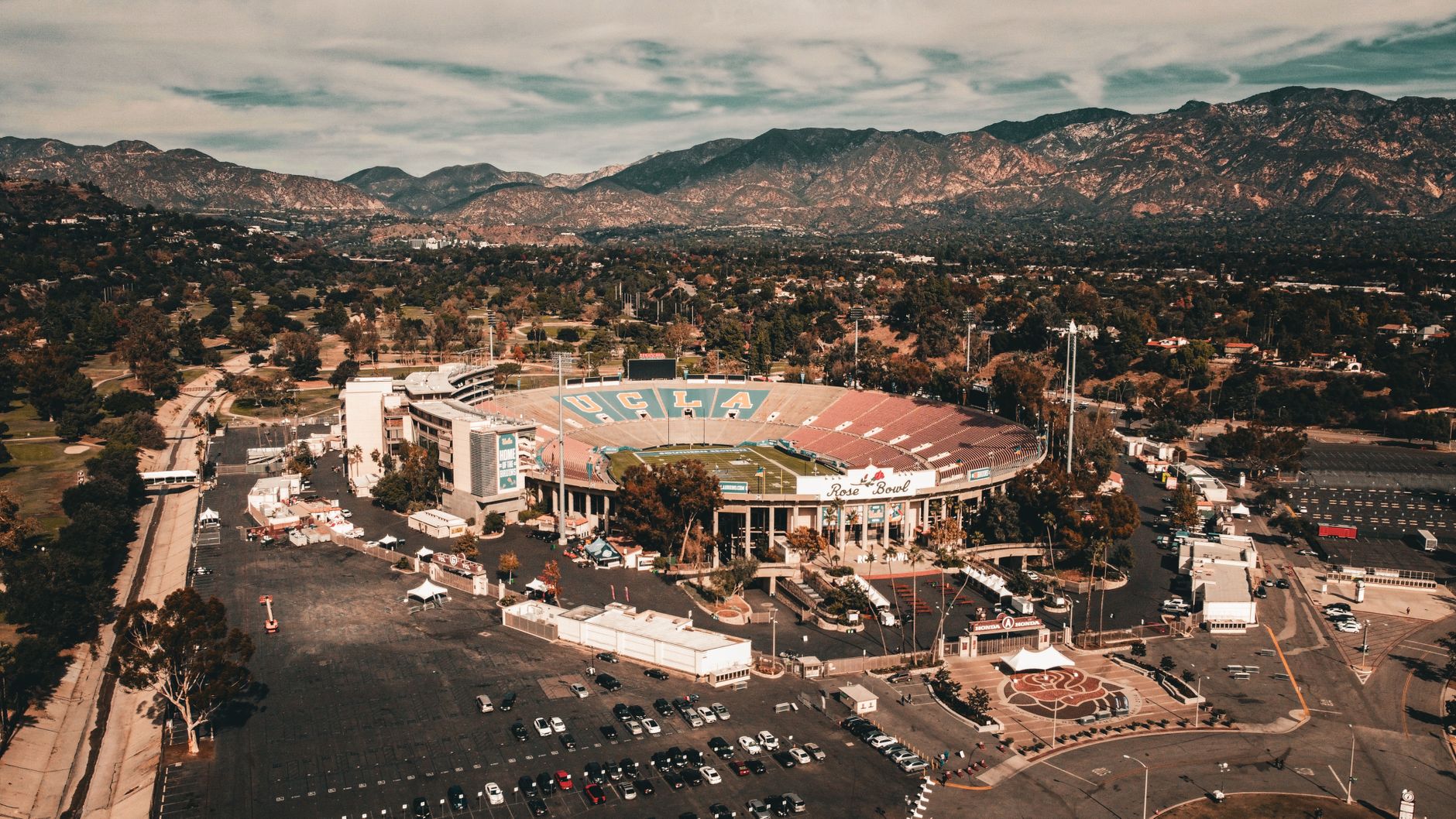
Photo by Caio Cezar on Pexels
To understand how market movement, team news, and tactical matchups connect, start with a structured preview approach.
What are three predictions for next quarter?
Three likely next-quarter trends are faster schedule-focused analysis, heavier attention on Los Angeles match planning, and earlier futures-market positioning. These trends follow naturally from the 2026 tournament scale, because fans and bettors need more lead time to evaluate travel, squads, venues, and price movement.
First, schedule literacy will become a competitive advantage. ESPN’s football schedule pages already centralize match-calendar habits for fans, and FIFA World Cup 26 will increase demand for quick fixture comparison. Second, Los Angeles content will surge because SoFi Stadium, the U.S. Men’s National Team match on June 12, the LA Memorial Coliseum Fan Festival, and Official Fan Zones create a concentrated media cycle. Third, futures markets will become more sensitive to squad depth, especially once final rosters, injury news, and warm-up performances become clearer.
Here is the evaluative view from Coach's Corner:
- Favorites with deep benches should hold value better across congested stretches.
- Underdogs with elite set pieces may outperform group-stage expectations.
- Host-city crowd effects will be over-discussed emotionally but under-modeled tactically.
- Teams with flexible midfield structures will handle travel disruption better.
- Early odds may offer more value than late public-driven lines.
For more on wagering preparation, review [Internal Link: responsible World Cup betting strategy].
What should smart fans track before matchday?
Smart fans should track schedule context, tactical identity, player availability, and market movement before matchday. These four signals explain more than headline rankings because the football world cup is a short tournament where one injury, one travel stretch, or one tactical mismatch can change a nation’s path.
Start with the schedule, then move to team shape. A team that defends in a low block may survive travel fatigue better than a team dependent on aggressive pressing. Next, review availability: a missing holding midfielder can matter more than an absent winger if the opponent thrives between the lines. Finally, compare odds movement against news timing. If a line shifts before mainstream outlets report a lineup concern, the market may already be pricing information that casual readers have not processed.
The best pre-match routine is simple:
- Check venue, kick-off time, and travel sequence.
- Compare expected lineups with recent competitive matches.
- Identify each team’s main chance-creation route.
- Review set-piece strength and defensive aerial matchups.
- Decide whether the market price still reflects true probability.

Photo by Tim Witzdam on Pexels
If you want daily coverage that treats football as both a tactical game and an information market, Coach's Corner is the next stop.
Frequently Asked Questions
Q: What is the football world cup?
A: The football world cup is FIFA’s premier men’s national team tournament. In 2026, it expands to 48 teams and will be hosted across the United States, Canada, and Mexico. The tournament brings together qualified national sides from every confederation and ends with a knockout-stage champion.
Q: How do I follow the 2026 football world cup schedule?
A: Follow the 2026 schedule by checking official FIFA updates, host-city pages, and reliable sports schedule providers. Fans attending Los Angeles matches should track SoFi Stadium dates, Fan Festival programming, and Official Fan Zones. Coach's Corner will also organize match predictions and tactical previews around each major fixture window.
Q: What is different about FIFA World Cup 26 compared with Qatar 2022?
A: FIFA World Cup 26 is larger, more geographically spread out, and built around 48 teams instead of 32. Qatar 2022 was compact, while 2026 spans North America across the United States, Canada, and Mexico. That changes travel, recovery, fan logistics, and how analysts should evaluate team depth.
Q: Why do World Cup betting predictions sometimes fail?
A: World Cup betting predictions often fail when they rely too much on reputation and not enough on context. Short tournaments are heavily affected by red cards, rotation, travel, injuries, and tactical matchups. A smarter approach is to compare odds with team news, venue conditions, and expected game state.
Q: How much does it cost to attend a 2026 World Cup match?
A: The cost depends on the host city, match category, ticket phase, and resale demand. Premium matches involving the U.S. Men’s National Team, Mexico, Argentina, Brazil, France, or England are likely to command higher prices. Fans should budget for tickets, accommodation, local transport, food, and potential Fan Festival expenses.
Q: Is Los Angeles a good place to experience the football world cup?
A: Los Angeles is one of the strongest 2026 host-city experiences because it combines eight matches, SoFi Stadium, the LA Memorial Coliseum Fan Festival, and countywide fan zones. The city also has diverse football communities that can create high-energy atmospheres for many nations. Plan transport early because matchday traffic and event congestion will be significant.
Thank you for reading.
Coach's Corner
High-Stakes Editorial · Premium Insights